
What is a Digital Twin, and how does it work?
A Digital Twin is an innovative technology that recreates a virtual model of a real object, process, or system. This virtual replica corresponds to the physical characteristics and behavior of its real counterpart, continuously updating in real-time using data from sensors, IoT devices, and other sources. The essence of the Digital Twin’s operation lies in creating a digital reflective environment where one can observe, analyze, and interact with the object, minimizing risks and optimizing processes. This technology finds applications in various industries, from industrial and design sectors to service and healthcare, providing more efficient management and more accurate predictions based on real data.
Let’s talk about the advantages of Digital Twin:
Digital Twin offers significant benefits in various fields, starting with improved data access for clients. As Digital Twin evolves, other notable advantages emerge, including reduced maintenance costs, informed decision-making for process changes with potential significant savings, and increased efficiency in technical maintenance and operational activities. In the design field, Digital Twins enhance multi-user interaction and communication.
An important aspect is the improvement of safety, quality, and control in the construction industry, leading to a reduction in incidents and errors. In the field of technical maintenance and operation, the benefits include operational optimization, reduced downtime, and lower costs for technical maintenance and personnel. The ability to interact with real-time data transforms the decision-making process, providing a new level of visualization and modeling of complex operations in three-dimensional reality, ultimately enhancing the efficiency and competitiveness of enterprises.
Sitowise Case Study: Using Digital Twin in Construction and Infrastructure with Unity
Sitowise, a Finnish company specializing in creating sustainable and innovative environments, addresses the challenges of future construction using Digital Twin technology and the real-time development platform Unity. Digital Twin is a virtual model of a real object or process, and in this case, Sitowise uses it to rethink infrastructure and buildings.
With Unity, Sitowise creates unique virtual scenarios for real-time simulations. This helps visualize projects, allowing for the viewing of both static and dynamic data in a digital environment. The company has developed Aura, a virtual 3D environment designed for visualization, data management, and collaborative work in the field of architecture, engineering, and construction (AEC).
Sitowise’s Digital Twin provides a more intuitive and visual interface for monitoring construction processes and infrastructure management. Consequently, the company can make informed decisions about process changes, minimizing risks, and improving the efficiency of technical maintenance and operational activities. This approach to creating a Digital Twin not only enhances the quality of design and construction but also contributes to a more sustainable and prosperous urban environment, aligning with Sitowise’s vision as a “smart city” company.
Case Study Results:
Volvo Cars Case Study: Innovative Application of Digital Twin in the Production Process
Volvo Cars, a renowned pioneer in safety technologies, also takes a leading role in incorporating interactive virtual experiences into the development processes of the automotive industry. Following a strategy of continuous innovative development, Volvo Cars addresses challenges using Digital Twin technology, creating virtual replicas of its cars at every stage of their lifecycle.
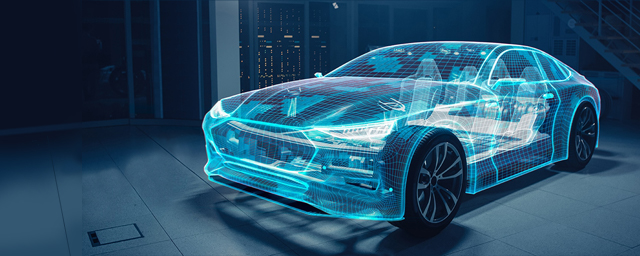
In search of a more efficient way to manage the production process, Volvo Cars chose Unity, a real-time development platform, to create virtual scenarios and bring together different teams involved in various aspects of car production. Unity serves as a “glue” in the company’s toolkit, facilitating communication between different modules and stages of production, from ideation to the final market release.
In this context, Digital Twin becomes a virtual model of each car, providing engineers, designers, and stakeholders the ability to visualize and interact with concepts and results in real-time. This not only enhances collaboration between different teams but also allows for the early detection of potential issues, significantly improving production efficiency and the quality of the final product. Thus, the use of Digital Twin in the automotive industry, as demonstrated by Volvo Cars, becomes a key element in an innovative approach to manufacturing and developing new cars.
Achievements of the Case Study:
Mortenson Case Study: Innovative Application of Digital Twin in AEC
Mortenson, a leading construction and development company with offices throughout the United States, is implementing cutting-edge technologies, including Digital Twin, to enhance processes in the Architecture, Engineering, and Construction (AEC) field. Mortenson’s goal is to reduce high costs and risks in medical projects by providing clients with the opportunity to interact with virtual simulations of new hospitals and operating rooms in three-dimensional spaces.
The use of Digital Twin in this context involves creating virtual replicas of medical facilities where Mortenson’s clients can visualize and interact with every aspect of the design, from medical instruments to working areas and technologies. This ensures optimal layout and ergonomics, leading to the optimization of patient care, increased staff efficiency, and reduced costs.

Digital Twin allows Mortenson to create precise virtual copies of objects even at the design stage, eliminating the need for physical prototypes. This facilitates accelerated design iterations and behavior validation, thereby reducing risks and shortening project development time. As a result, Mortenson successfully applies Digital Twin, providing clients with more efficient and innovative solutions in medical projects.
Case Study Achievements:
What About the Future of Digital Twin?
The future of Digital Twins promises exciting transformations in various industries. With the advancement of technologies and the expansion of the Internet of Things (IoT), a deeper integration of Digital Twins is anticipated, transitioning from individual objects to networked ecosystems. In the future, we can expect a broader use of Digital Twins in the healthcare sector, where they will play a crucial role in modeling organisms and predicting diseases.
In urban planning and resource management, Digital Twins will contribute to more efficient infrastructure and energy utilization. Moreover, with the expansion of cloud computing and artificial intelligence, the future of Digital Twins foretells more accurate forecasts, increased automation, and the ability to adapt to real-time changes. This technology will play a key role in shaping a sustainable and innovative future, where Digital Twins become an integral part of our everyday lives.


